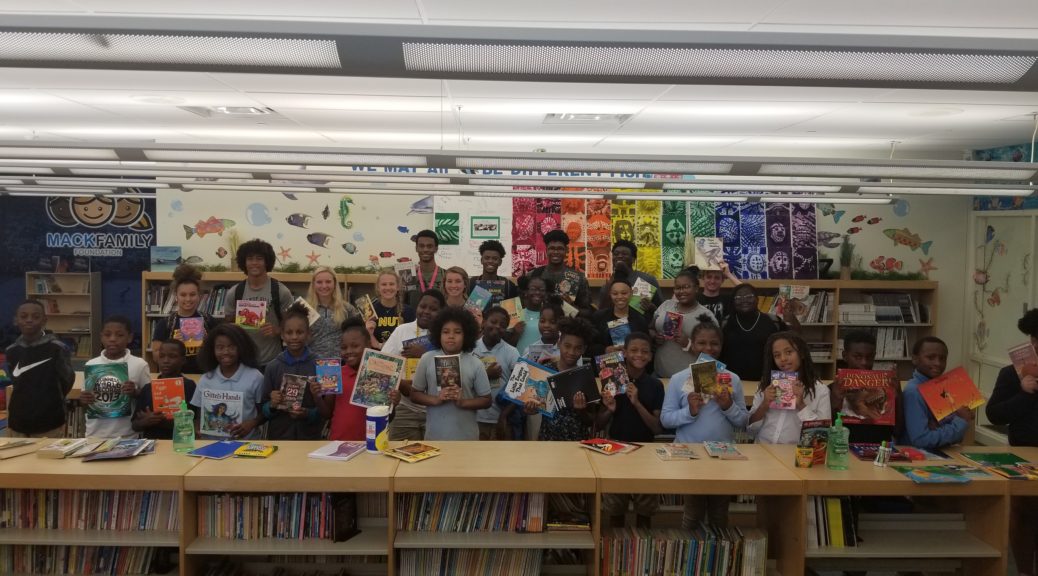
All posts by Nahamani Yisrael

First Ever Community Connections Day Hosted at Winton Hills Academy

A few months ago, Cincinnati Public Schools approached ABC with an idea to pilot Community Connections Day. The idea was laid out: on an upcoming in-service day when schools would be closed, CPS and ABC would partner to develop a full-day of fun and meaningful learning opportunities for children. This would harness the power of community and prevent working parents from having to take a day off of work, hire a babysitter, or leave their children unsupervised. From this conversation, the first Community Connections Day was born.

The program piloted on Monday, February 3 at Winton Hills Academy. ABC worked with community partners to organize a variety of enrichment activities to keep the students engaged throughout the day. Approximately 65 students took part, participating in activities such as chess, art, drones, soccer, and more.

William Johnson, who serves as the M.O.R.E. Program Coordinator and Community Partnership Specialist for the District, worked collaboratively with Activities Beyond the Classroom’s Director of Elementary Programs Rachel Stallings, to coordinate over a dozen enrichment activities to keep the children engaged for the day.

Johnson and his staff considered the Community Connection Day a win-win for both the district and the community. “Rather than parents needing to call off from work, or having the kids running around the neighborhood, opening the building is a better use of our community assets. CPS’s goal is to help kids find their talent and their passion, [Community Connection Day] is an opportunity for them to learn a new skill, like chess, make new friends, and be active and engaged.”

Opportunities and Activities Abound

Students from kindergarten through 6th grade spent their day off learning new skills and experiencing new opportunities.  After breakfast, the students were broken up into six groups. Each group took part in six different activities throughout the day, including:

Annie Ruth – Artist In Residence

Annie Ruth, an author and internationally-traveled visual artist, led Story Quilt. Ruth has created and curated several art installations throughout Cincinnati. According to Ruth, the quilting activity was designed to make cultural art tangible for the kids.

Art, Art & More Art

Lillian Carr, a long time art teacher at CPS, offered children a variety of hands-on art-infused activities, including weaving with colored paper as well as making stars and paper fish. Each of the six groups chose which activity interested them the most.

Younger students got to try their hand at another artistic experience led by Ceneetra of Abrakadoodle, where they used a poured paint technique to create abstract art. The students worked in small groups, and together they decided on their color choices and executed the team’s plan of pouring, flipping and turning.

“We want to spark their creativity, so we teach them the process. This is not about the finished product, instead, it’s about the process.”

Activities Facilitated by The D.A.D. Initiative

The D.A.D. Initiative facilitated three very different activities with the students. One session, led by Mr. Drew, taught the kids about chess. Mr. Drew took the time to show the students the rules of the game, and demonstrated how each piece is permitted to move about the chessboard. “Teaching chess helps structure the minds. It teaches them analytical skills and to see the big picture,” said Mr. Drew.

Another member of the D.A.D. Initiative, Daniel Ware, took over the gym and taught the kids how to play flag football. Ware used the opportunity to instill positive affirmations in the kids.  After the kids stretched, they repeated the following creed:  “I am smart, I am confident, I am well behaved. I am somebody. I am somebody.  I am somebody!”

According to Ware, the creed is used to affirm positive character traits and confidence. The creed worked wonders as the kids were extremely well behaved under Ware’s watch, and played a highly organized game of flag football.

The D.A.D. Initiative teaches social and emotional learning to students through a variety of after-school programming at College Hill, Cheviot, and all-day during S.T.E.A.M. Fridays at Roselawn Condon.

Kids interested in STEM (Science, Technology, Engineering, and Math) were in for a special treat at the Community Connectors Day. D.A.D. Initiative member, Shawndale Thomas taught some of the older students about Drone Piloting.

Thomas showed the students videos featuring various applications where drones are used for photographic purposes.  The students even had an opportunity to fly small scale drones. According to Thomas, “teaching kids to fly drones teaches them to be strategic with their decision-making. Also, they learn that every input causes an output, so we are basically showing them that their actions have consequences.”

A Kick Out Of Soccer

Winton Hills students also got to learn the basics of soccer, such as how to dribble a soccer ball and kick a goal. The manager of ABC’s elementary soccer program, Tony Capurro, led two groups of students through soccer drills. According to Capurro, “soccer is good physical fun for the kids. It gets them moving, teaches them core fundamentals, and gives them an opportunity to try something new.”

Grafitti Art

Our content developer, Nahamani Yisrael, also got to take part in the activities. In addition to writing about the day, Nahamani joined in the artistic fun while learning how to create Graffiti Art. This activity was lead by Brandon Hawkins of Soul Palette, who is a muralist and teaches Graffiti Art at Elementz. Brandon used an analogy of the human body to teach the kids how to create the various layers of urban art.

Other Activities

Other activities included Hands-on Science where students learned how the body’s connective system works using movement and dance. Younger students made slime and abstract art using shaving cream and paint during UpCycle Art’s session.  They also played drums and ukuleles at the instruction of Strums and Drums.

Big Fun for All Ages

The kids weren’t the only ones who got to have a little fun during Community Connections Day. Each group of students was led by a paraprofessional. Paraprofessionals usually assist teachers throughout the school day, but when school is closed, they don’t work. Community Connections Day gave paraprofessionals a way to earn a little extra money, while giving the kids something fun to do.

A Huge Win for All

As parents picked up their children from Winton Hills Academy, they shared their thoughts on the day. They were pleased to give their children something fun to do during the day, and many of the parents we spoke with had to work, so they greatly appreciated being able to have somewhere safe for their children to go. Even parents who did not have to work enjoyed being able to get their kids out of the house. One parent, Krystal, used the Community Connections Day to expose her daughter McKenzie to other children. “She’s an only child. This allowed her to interact with other kids and make new friends.

Ife Bell, Manager of Community Partnerships for CPS, summarized the day by saying “the point of us doing this is about family engagement. This is a matter of safety for our kids.”

Parental Involvement Helps Martial Arts Program Thrive

ABC’s extracurricular programs are all about the kids, but sometimes it’s important to shine a light on others who make the program thrive. For ABC’s More than Martial Arts program, offered at Mt. Airy and Hartwell Elementary Schools, much of the success has been thanks to the parents of the students enrolled in the program.

Martial Arts students win big at local tournament!


About ABC Martial Arts Program

Students in More Than Martial Arts, a partnership between ABC and Five White Tigers,  participate two days per week for three hours after school, which includes an hour dedicated to helping students with homework and social emotional learning. During training, students learn:

  • Forms – detailed choreographed pattern of movement students practice alone and in unison.
  • Board Breaking – student strikes a surface to break one or more objects, typically wooden boards.
  • Mental Self Defense – students are taught how to react in various situations such as stranger danger or bullying
  • Basic Self Defense – students are taught to use physical combat as a last resort.
  • Classical Weapons Handling – taught to higher ranking students only.

Students are expected to adhere to a codified system of ethics. Rather than focus on the combative elements of the sport, Master RJ Trusty spends training time teaching values such as self-respect, self-discipline, integrity, and patience. He also holds the students to high standards regarding the student’s appearance, including the cleanliness of their uniform and how they tie their belt, and teachers them to respect authority figures (those of a higher rank).

How Parental Involvement Helps

Martial Arts parents attend community event to support their children.

Master RJ Trusty greatly values the impact that increased parental involvement has had over the past couple of years. “Having parents and grandparents attend the tournament and cheer their children on is great for the kid’s self-esteem!” Parents who actively participate in the practices and after-school training feel positive about the impact that martial arts training is having on their children, and encourage more parents to get involved in the program. One parent said:

“Extracurricular activities help to improve students academically and socially. Kids need to be involved to improve their character and overall development. Zac is becoming a more confident kid with reading, has a better attention span and listens more. He is having fun and his body is getting stronger.”

Another parent noticed their student had obtained “better balance and more focus”. They felt that parent participation in the program “helps build confidence and independence (finding likes and dislikes). Also, the program motivates them to do well in school and at home.”

The martial arts program provides parents a variety of ways to get involved, including helping out with uniform prep, holding boards, loading, and unloading of equipment at Martial Arts tournaments, and making sure tournament participants have lots of healthy snacks during the day-long events. Parents who opt to simply observe during practices are still impacting their child’s progress; their moral support and words of encouragement boost the participant’s energy and determination.

Positive Outcomes in the Classroom

The impact that More Than Martial Arts is having in the classroom has gotten even more parents excited about their child’s participation in the program. Because the children in  the program thrive, they have more confidence and better focus in the classroom.  This leads to students getting better grades and takes some of the strain off of educators, allowing them to focus more on teaching and less on discipline.

Martial Arts training is a great way to teach children about self-dicipline.

In addition to learning self-respect, self-discipline, integrity, and patience, martial arts students also learn how to handle conflict in a non-violent way. “We teach the students to use their words first. We give them tools that help them react to various situations. Students are taught that fighting should always be looked at as a last resort,” explained Master Trusty. According to Master Trusty, teachers are constantly giving him positive feedback about the students whom he trains. “They’d really like to see martial arts training year-round!”

Every Little Bit Helps

“Be present,” encouraged another parent of a martial arts student, when asked how parents can best help students succeed. Parents who are active in their child’s extracurricular activities send a strong message that these activities are important. Additionally, most students perform better when their parents are watching.

For parents with a limited amount of time to get involved, one way of getting involved is having the students demonstrate what they have learned to their family at home.  Asking the student to teach a parent about the moves in a form or technique is another very effective way to help the student achieve. 

Master Trusty adds, “even parents with busy schedules can find some way to get involved in the martial arts program.” He encourages parents to have a conversation with their child’s coach to see what opportunities exist. Simply dedicating a small amount of time can play a huge role in a child’s performance in their activity and in the classroom. 

Keeping Student Athletes Safe with a Sports Medicine Team

This is the first in a series of articles highlighting the important role athletic trainers and sports medicine physicians play in high school sports, while showcasing the contributions of Cincinnati Children’s Hospital to the student athletes of Cincinnati Public Schools (CPS).

Providing opportunities for extracurricular activities such as athletics, arts and more is at the core of Activities Beyond the Classroom’s work.  To ensure the safety of student athletes in grades 7-12, ABC partners with Cincinnati Children’s to provide full-time on-site medical support for CPS high school athletic programs.

Prior to Cincinnati Children’s involvement, only two CPS schools had on-site sports medicine care; now, that number is up to 10.  The Sports Medicine program provides full-time athletic trainers, plus a sports medicine doctor who cares for students on and off the field.

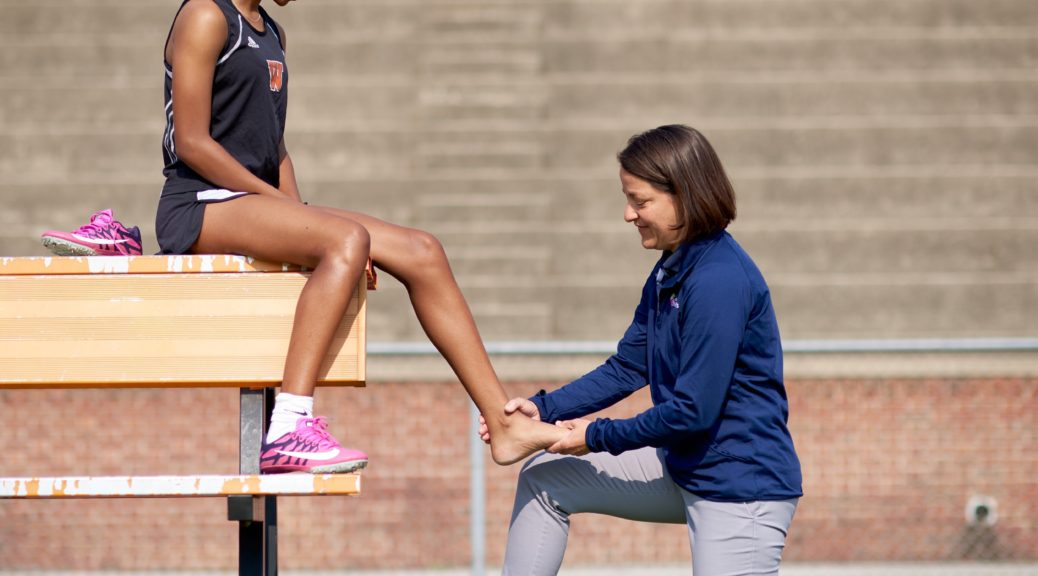
During the day, the athletic trainers helps students with injury prevention and rehabilitation; they also serve as liaisons, communicating with parents, coaches, and physicians.  After school, the athletic trainers are on the field serving as first responders in the event of a sports-related injury.  When an injury does occur, the athletic trainers assess the student and determine if emergency treatment is necessary, if the child needs to see a physician, or if they are able to rest and return to the game.

Providing medical support for student athletes is important because studies show that children who participate in extracurricular activities, including athletics, are more likely to succeed academically. If a student athlete is injured and unable to return to the game due to a lack of medical care, they are more likely to see a decrease in their academic performance.

One local study (done in 2008) showed that kids who are involved in athletics have a 22% higher GPA across the Cincinnati Public School District.  A 2014 study by the Los Angeles Unified District saw a significant increase in GPAs and graduation rates, plus lower rates of absenteeism among student athletes.

An athletic trainer tends to a football player at a CPS High School

Spotlight: Dr. Kate Berz at Clark Montessori

Dr. Kate Berz is the Team Physician at Clark Montessori Junior/Senior High School and St. Bernard-Elmwood Place High School. She is also a Physician at the Division of Sports Medicine and Emergency Medicine at Cincinnati Children’s.

Dr. Berz treats Clark’s student athletes at a clinic located on school property, inside the athletic trainer’s office.  On any given day, she may treat upwards of eight student athletes on campus, and even more at her Cincinnati Children’s office. For high-impact sports, like football, Dr. Berz and her counterparts are on the sidelines during games.

Dr. Kate Berz of Cincinnati Children’s treats a high school student’s injury.

Dr. Berz began her involvement in team sports as an athlete (basketball and soccer), then as a college soccer coach.  After medical school, she chose to focus on pediatrics. When an opportunity to serve as a specialized Sports Medicine Fellow presented itself, she was quick to pursue it.  After completing her fellowship, she joined the Sports Medicine division at Cincinnati Children’s.

According to Dr. Berz, “physically active children and teenagers are healthier physically, psychologically, and emotionally. But it’s important to balance sports with the student’s overall health.” She strives to make sure that her patients take the best possible care of their developing bodies. “We care deeply about the kids and treat them as we would our own children. Our goal is for them to play and remain active and healthy. Sometimes rest and rehab is what is needed. That is where our athletic trainers in the school are so important, because they get to know the student athletes and their needs. Every day the athletic trainers go above and beyond when working with these kids. We want to help the students meet their goals, play in college and beyond, and learn about healthcare jobs and life after high school. More importantly, we want them to be able to walk when they are 30!”

Keeping student-athletes safe is a home run for all

When she is not in the clinic or on the playing field, Dr. Berz spends much of her time doing outreach programs for the Division of Sports Medicine.  In this capacity, she works to foster relationships with partners like ABC. She advocates to keep kids healthy while they participate in sports, educates medical and non-medical professionals about sports medicine topics, such as asthma, and offers guidance on how to keep kids in school. She also shares her knowledge of the human body and muscular system to help reduce childhood obesity and help children live healthier lives.

Little Swimmers Make A Big Splash

Beginning in the 2017-2018 school year, young students at William Howard Taft Elementary School were introduced to swimming lessons through a unique collaboration called Swimming for Safety. The program, a brainchild of Activities Beyond the Classroom’s Board Member Carol Gibbs, recognized an opportunity to use the therapeutic pool at the Mt. Auburn Community Center (which connects to Taft Elementary) as the perfect resource to teach young children about water safety and swimming.  Gibbs, who also serves as President of the Mt. Auburn Community Council, brought the idea to ABC, who then collaborated with Cincinnati Public Schools and the Cincinnati Recreation Commission to bring the program to life.

Pilot Program At Taft Elementary

The first year, the program was only offered to kindergartners at Taft, but it has since expanded to grades K-3. ABC recently wrapped up the program for the 2019-2020 school year, with a total of 130 children participating for six weeks of lessons, two times each week, for 45 minutes each lesson.

Students learn about swimming from certified aquatics instructors

Through the program, children learned basic swimming techniques, such as the doggy-paddle, how to swim to and identify the edge of the pool, how to save themselves during a water emergency, and other important water safety skills. Thanks to our generous donors and community partners, Activities Beyond the Classroom was able to provide each swimmer with a swim-suit, towel, and pool shoes.

Elizabeth Cone, Principal of Taft Elementary, said, “our goal is to introduce pool safety and swimming to children as early as possible. This program provides a safe, aquatic environment with certified instructors. Swimming is a life skill that all children should be given the opportunity to learn.”

Swim Lessons Save Lives

ABC provides suits, towels and flip flops for all participants.

Learning to swim can be a life-saving skill. Additionally, it opens up new opportunities for CPS students, such as participating on swim teams, in water sports and potentially even become competitive swimmers. According to Gibbs, “it’s important for every child to learn how to swim. If they don’t learn to swim they never know if they want to be an Olympic swimmer.”

Principal Cone also went on to share some daunting statistics regarding water safety. Statistically, drowning is the 2nd-leading cause of accidental death among children ages 1-14. According to Cone, “formal swimming lessons and water safety training greatly reduces the risk of drowning for this age group.”

Principal Cone is greatly appreciative of the support ABC provides the young swimmers. “Without the generous support of ABC, there would be no program. ABC has been a tremendous help with purchasing supplies for every student that participates.”

The Future Of Swimming For Safety

The rewards of seeing young children return each year and grow into strong swimmers are immeasurable. For many of the students at Taft Elementary, this opportunity was their first exposure to structured swim lessons. Some of the children have since gone on to take swimming lessons outside of school.

Activities Beyond the Classroom and Cincinnati Public Schools are hoping to expand this program, offering swimming lessons throughout the district. If you would like to help us achieve this goal, please consider making a donation today.

Student Spotlight: Shawnta Hunter Toots Her Own Horn

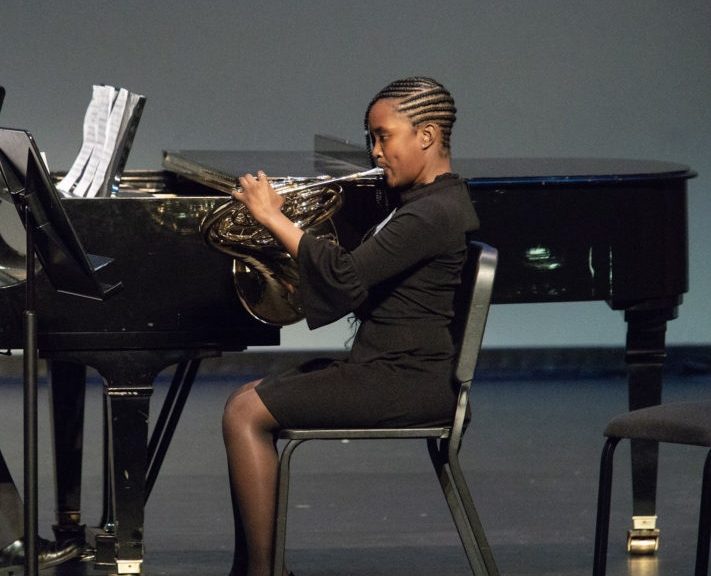
High school junior Shawnta Hunter is a multi-talented Instrumental Music major at School for Creative and Performing Arts (SCPA).  Her performance career began when she was a 4th grader; at SCPA 3rd grade students are required to audition for each major prior to the beginning of their 4th grade school year.  Shawnta was shocked when she learned that she was selected as a Band major.  Shawnta played the trumpet in the band for the first five years of her musical career.

When Shawnta began 9th grade, she transitioned to the French horn, “It was right around the same time I got my braces,” added Shawnta.  When asked what it was like switching from trumpet to French horn, she replied, “at first, it was crazy.  The intervals are very different.  It was a big change for me.  It was hard, but I finally got the hang of it.”

Ben Carlson-Berne Scholarship Opens Doors 

Shawnta’s band teacher recognized her raw talent and recommended that she pursue private lessons.  As a result, she got connected with the Ben Carlson-Berne Scholarship Foundation (BCB).  BCB helps young students interested in learning classical music by providing private lessons with musical performers. BCB is a non-profit organization named in honor of the late Ben Carlson-Berne, a young classical music enthusiast who gave lessons to disadvantaged youth in his free time.  Today, the organization provides music lessons to students beginning in 6th grade, with a commitment to continue those lessons through graduation as long as the young musician displays interest.

As part of her involvement in BCB, Shawnta has been taught by two renowned musicians during her early high school years.  Her first professional instructor, Patrick Hoege, taught her the fundamentals of playing French horn. However, after her freshman year, Hoege moved away from the Cincinnati area.  Upon his departure, she was assigned to a new instructor, Jessica Pinkham.  Beginning in her sophomore year, Pinkham began providing Shawnta private lessons.

Jessica Pinkham plays second horn in the Dayton Philharmonic Orchestra.  Pinkham obtained her Masters of Music from SMU, Meadows School of the Arts (Dallas, TX).  In an effort to pair each student with a highly skilled instructor, the Ben Carlson-Berne Scholarship Fund partners with Concert Nova to find instructors.  Activities Beyond the Classroom, who serves as the fiscal sponsor for BCB, handles the day-to-day management of the organization’s funds, allowing the Executive Director, Susan Carlson, to focus her efforts on finding opportunities for student musicians like Shawnta and educating the community about the importance of classical music instruction.

Since joining BCB, Shawnta has had the opportunity to play with the Cincinnati Youth Wind Ensemble as well as the Cincinnati Youth Symphony Orchestra Philharmonic.  “Playing in the Philharmonic has opened so many doors for me, and is bettering me as a musician”.  To witness Shawnta play French horn, check out this video on YouTube.

Professional musicians shared their stories with the students as part of the CPS International Jazz Festival

The CPS International Jazz Festival

Recently, Shawnta participated in the Inaugural CPS International Jazz Festival, presented by Activities Beyond the Classroom.  This amazing event took place on Saturday, October 5th at the Aronoff Center for the Arts.  The citywide music festival provided a platform for student musicians, professional artists and internationally renowned musicians from around the globe to bring their talents together.  Shawnta was among the 250+ CPS student musicians who participated in a day filled with educational sessions, student workshops, clinics, master classes and finale performance wherein 700 attendees were treated to an evening of artistic expression in the form of jazz music.

“The experience was amazing! It was definitely a game-changer for me because jazz is something I enjoy, but it’s something I’m still getting used to. My nerves were through the roof, but when you’re playing jazz, it just has this inviting feel, so once you start to play you get more and more comfortable. I’ve participated in plenty of festivals, but they’re always classical, so doing this helped me step outside of my comfort zone. It’s definitely something I would want to do again!”
More About Shawnta

Shawnta enjoys playing both classical and jazz music.  She enjoys all genres of music, but she is particularly fond of R&B and soul.  Because of her jazz background, she often finds herself mimicking music she hears on the radio.  Of course, she puts her own spin on it; this technique known as improvisation is a spontaneous invention of melodic solo lines and accompanying parts.  Outside of school and music, Shawnta works as a stand supervisor at the Larosa’s in Kings Island.

Shawnta encourages young musicians and music enthusiasts to continue practicing.  “Keep going with the lessons.  You will get better, so don’t give up. ” Having someone like Pinkham pushing her to continue to improve helps boost her confidence, and gives her the courage to keep going.  Shawnta attributes her rapid development as a musician to the extra time she and Pinkham spend practicing over the summer months, made possible by the tremendous work of the Ben Carlson-Berne Foundation.


Q&A with Carol Gibbs of the ABC Board of Trustees

This is the latest in a series of “get to know us” posts about ABC’s leadership, both on the Board of Trustees and our staff. These stories give an insider’s view of the people behind Activities Beyond the Classroom. 

ABC Board Member Carol Gibbs is a long-time community activist and volunteer. She is currently the President and CEO of the Mt. Auburn Community Development Corporation, which Gibbs founded in 2015 to strengthen and coordinate business and housing development in Mt. Auburn.  In addition, she has been involved in a number of Cincinnati organizations, including the Strategic Engagement and Planning Committee for Cincinnati Public Schools, Mt. Auburn Community Council, Taft Elementary School, William Howard Taft Historic Site, Neighborhoods of Uptown Leadership, Cincinnati Youth Collaborative, Ohio Foodbank Association, and more. ABC recently sat down with Gibbs to learn more about her background and why she is involved as an ABC board member.

The age-old Cincinnati question… Where did you go to school?

I attended Woodward High School.  Back in those days Woodward and Walnut Hills High Schools were very closely related.  Woodward was the “neighborhood school” for what was then a predominantly Jewish area of town.  Woodward had a football team and at that time, Walnut Hills did not.  We always had dances after games, and Walnut Hills’ students would come to the games and attend the dances.  Also, the schools had joint Sororities and Fraternities.

What is your professional background?

My career goal was to put an end to poverty.  For years I served as the District PTA President at CPS, and my husband often teased me because I attempted to mother every child.  Professionally, I led an organization called ACT (Accountability and Credibility Together) which worked with families receiving public assistance.  Our organization worked closely with Job & Family Services to get individuals off of welfare and out of poverty through education.  ACT served 1,500 families per year.  We had some amazing success rate, with 97% of our families off of welfare a year after they left the program and 85% off welfare 5 years after leaving the program.

One of the programs from that relationship that I am quite proud of is the partnership with University of Cincinnati.  We were able to offer participants a 2-year Associates degree right from our offices.  Our downtown offices had computer labs where parents could do homework, and a kitchen area where they could prepare meals for their children while they were in our facility.  Additionally, we offered educational programs and tutoring for the children of the families we served.

Tell us a little about your family.

I have two kids: a daughter and a son.  My daughter, Carrie, attended the School for Creative and Performing Arts.  My son, Steve, attended Roger Bacon, where he played football.  Both of my kids played soccer.  I was a single mom for many years until I married my husband Steve in 1997.  Today, we are parents to a 10-year-old Siamese Bluepoint kitty named Bartholomew.  Our Bartie is a cancer survivor; he was diagnosed at the age of 2.

Did you participate in any extracurricular activities?  If so, which ones, and what skills do you think you gained from them?

I was involved in drama and theater.  The most important lessons learned from being in drama were teamwork, knowing what others do well, and knowing who to go to for assistance.  My love for theater continued after high school, as I was part of the apprentice program at the Cincinnati Playhouse.

Ironically, when my daughter was in school, there was a production that needed someone with theater experience.  My kids did not know about my days working at the Playhouse, so when I was able to step in and help out, my daughter was really caught off guard.

Outside of ABC, in what ways do you give (or in what ways have you given) back to the community?

I am President/CEO of Mt Auburn Community Development Corporation.  I am also very much involved in the Mt. Auburn Community Council and leading the Cincinnati Parks Advisory Council (CPAC) working to revive Inwood Park.

I have served on the board for many organizations over the years, including the Cincinnati Youth Collaborative, Hamilton County Human Services, several decision-making committees for local schools, and even the William Howard Taft Historic Board.

In addition to serving on the Activities Beyond the Classroom Board of Trustees, I am a member of the CPS Strategic Planning Committee.  We meet monthly, and are looking at how CPS can address the fact that not every student has plans to attend college.  We look at alternative ways that we can prepare students for life after high school. Our goals are to give them as many opportunities as possible, and help them understand what their choices are.

How did you become involved with Activities Beyond the Classroom?

My involvement with Activities Beyond the Classroom stemmed from the work I was doing to encourage young people to learn how to swim.  We had a unique opportunity with the Cincinnati Recreation Commission (CRC) pool that is attached to Taft Elementary School.  The CRC was only using the pool as a therapeutic pool, and we began working with them to get the young students access to the pool.  After we had some success at Taft, we were determined to expose young school-aged children across the district to water safety by providing them with swimming lessons.  As we were working on this, I was introduced to Brian Leshner.

ABC’s philosophy fit perfectly with everything I believed and stood for.  When I joined the ABC Board of Trustees, it was all men, mostly men involved in baseball, football, etc. As a board, our involvement with music, art, and theater was a fairly foreign concept.  Today, we are heavily involved in artistic expression in addition to the work we do with sports-related extracurriculars.

What do you see as the greatest challenge for today’s students, and what do you think ABC’s role is in addressing this challenge?

Poverty is the biggest challenge our students face.  Poverty, along with all that it brings to the home and school life.  Many of our parents are struggling to make ends meet. Some of the living conditions our students experience are not up to standard.  My hope is that we will do more to break the cycles of poverty.

We need more diversity in our schools.  Unfortunately, when we lack socioeconomic diversity in our schools it leads to a lack of understanding among different populations.  ABC is offering every student with extracurricular experiences.  These experiences lead our students to see the world around them differently. These opportunities stretch their vision of themselves.

What is one of your favorite ABC programs, and why?

Swimming for Safety, of course. It’s important for every child to learn how to swim.  Learning to swim can be a lifesaving skill for a child.  Simply being able to paddle to the edge or remain calm in an unexpected situation can make a huge difference.

Additionally, if they don’t learn to swim, they will never know if they want to be an Olympic swimmer.  ABC is all about providing young people with a variety of experiences.  I am proud that we are able to include water safety in our program offerings.

ABC recently hosted the inaugural CPS International Jazz Festival on October 5th. What benefits do you think this event brought to the city of Cincinnati?

The CPS International Jazz Festival was an opportunity to change the perception of CPS children by demonstrating that there is another side of our children. Many of the community’s perceptions of our students are negative.  Some individuals in the business community have lost faith in CPS students, and we were able to show them the talent these kids possess.  Additionally, it showed the power of organizations like ABC.  Hopefully, this will encourage more involvement in the lives of our young people.

What has been the most rewarding outcome you’ve witnessed or experienced at ABC since joining the Board?

One of the most rewarding outcomes is watching young swimmers overcome their fear of the water.  Early on, the children were afraid to get into the pool.  They would cling to the walls and many were terrified in and around the water. After a few lessons, the kids couldn’t wait to jump in!

Young swimmers enjoy learning about water safety and swimming at Taft Elementary.

What are some goals you’d like to see ABC accomplish in the future?

In my opinion, we are internalizing too much.  I’d like to see us conduct more assessments of the kids we serve.  This would allow us to find out what the kids want to learn and participate in.  I’d like to see us asking the kids instead of simply asking adults.  The experiences we offer may not be “at the school”—maybe they are something like the jazz program that happened at the Aronoff Center for the Arts, or a district-wide drama club.  We won’t know if we don’t ask.

What is the most important thing you would like the public to learn about ABC?

I’d like them to know that we are here to broaden children’s knowledge.  There are many things kids can learn beyond the classroom.  I really believe kids learn just as much outside of the classroom.  It’s just a different type of education.

If we’re to reach CPS’s goal of getting kids ready for a career then we must offer them more than math and English.

Teaching Elementary Students To Go The Distance

In 2006, cross country legend Reggie McAfee turned his love for running into Cross Country for Youth, an organization that teaches character while instilling healthy habits in school-aged children.

McAfee, a Hall of Fame runner, is spending his golden years bringing his amazing cross country and character development program to schools throughout the country. He started his program in 2006, in Charlotte, North Carolina, and expanded it to four CPS elementary schools in the fall of the 2019-2020 school year. Activities Beyond the Classroom supported McAfee in his efforts to get the program up and running in CPS.

Character Building Comes First

The core focus of Cross County for Youth is not running, it’s character building. “We want to catch the younger kids early on, give them the tools they will need later in life, and help them better perform in the classroom,” said McAfee. Lessons on topics such as discipline, respect, integrity, and perseverance are instilled in young students at a formidable age. Site Coordinators facilitate the classroom learning sessions and provide the coaches with the character message of the day, so that the coaches can reinforce those values during practice.

Young runners support their teammate while being handed a medal.

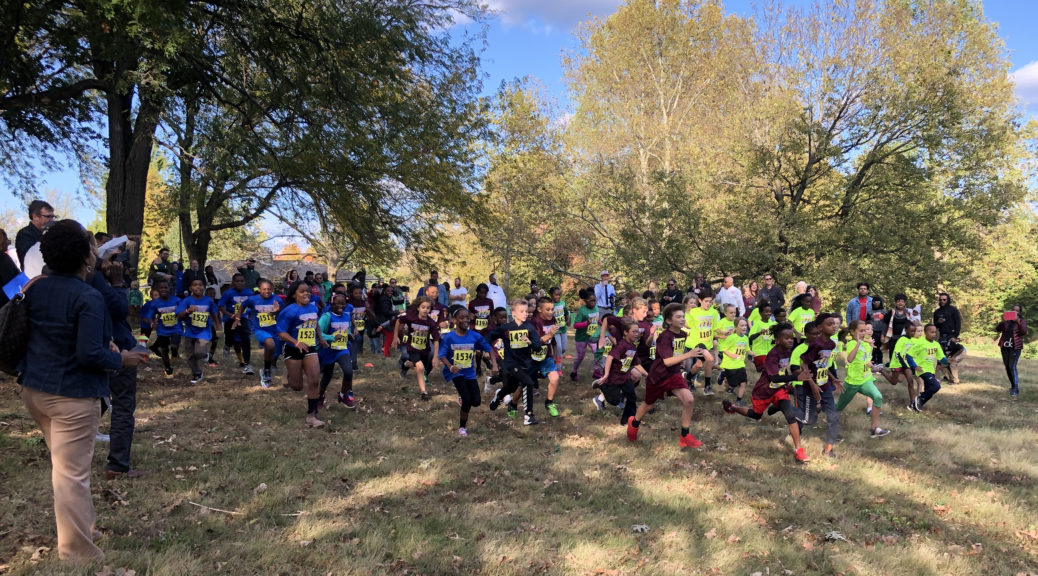
McAfee and his team created a 10-week curriculum and fitness regimen that focuses on instilling these character traits. Students met two times a week to practice their newly learned skills. Each 90-minute session includes 30 minutes of classroom instruction in the areas of character building and nutrition, and 60 minutes of distance running.

Many of the students who participate in Cross County for Youth are not on any sports team and have never experienced distance running before.  “We typically go after kids who are not considered athletic, and over the course of 10 weeks get them to the point where they can run two miles,” said McAfee.  Cross Country for Youth works with children with varied physical abilities, including students with handicaps, breathing difficulties (such as asthma), and other ailments, such as ADHD. According to McAfee, “elementary school kids run all over the place.” Thus, he decided to teach them to harness their natural energy by introducing them to the sport of cross country.

During each character-building session, students are taught about a specific topic related to positive behavior. The Site Coordinator defines the characteristic, then the students are given examples of the character attribute and provided with scenarios where they are asked how they would handle the situation. Afterward, the Site Coordinator helps them determine which decision demonstrates the highest form of the characteristic. After each session is completed, students are sent home with “Points to Ponder,” cards that let the parents know what their child was taught during the sessions.

Measuring Success

McAfee asked Alvin Jefferson, a retired professional with Xerox, to join the Board of Directors prior to the launch of Cross Country for Youth in 2006. Jefferson was a non-runner who went to college on a tennis scholarship. That said, he knew from working with McAfee at Xerox that McAfee was committed to excellence, and decided to accept McAfee’s invitation.

Together they came up with a strategy to measure the impact of the cross country program. At the beginning of each season, the Site Coordinators do a pre-screening, followed by a post-survey. In addition to measuring the students’ Body Mass Index, they track behavioral changes in the areas of physical activity, nutrition, and character.

Quite possibly, the best measurement of the program’s success is the essay submissions the organization receives. In these essays, young students share how this program has impacted them.

Cross Country teaches the great skill of running. I learned strength and stamina and got better at pacing. I also learned about nutrition and how it affects the way I run. Healthy food boosts energy for running long distances and I personally ate an apple before every cross country meet. By eating well and doing practice runs each week I improved my time from the first race. At the final competition, I was able the complete the race without walking.                                                                                                                                                                                                          -Finn, 6th grader at Fairview Clifton German Language School

Cross Country for Youth has helped me feel more confident in everything, even schoolwork. I
feel like I can get through more challenges without giving up or slacking effort. I try more and when I get stuck. Rather than just being stuck and putting the wrong answer, I’ll try to work hard enough to get the right answer.

-Theo, 4th grader at Fairview Clifton German Language School

Living Legend Pays It Forward

Reggie McAfee after he ran the mile in under four minutes

Reggie McAfee has a long-standing relationship with running. He grew up in Cincinnati’s West End, Mt Auburn and Avondale neighborhoods. He attributes his successful running career to a variety of opportunities that he was afforded at a young age. For example, when he was still very young, McAfee received a scholarship from Christ Cathedral Church to attend summer camp. “I will never forget that experience—it gave me the opportunity to see what life was like outside of the city.” During the hot summer months, volunteers from the Walnut Hills area opened up the track and worked with children, including McAfee. Furthermore, McAfee spent many cold winter days running on the indoor track at the YMCA on Central Parkway, in Over-the-Rhine.

After graduating from Courter Tech High School in 1969, McAfee went on to Brevard College, where he obtained the National Championship in the 1-Mile and 2-Mile competitions of cross country. While attending the University of North Carolina in Chapel Hill, McAfee made history, and became the 1st African American to run the mile in under 4 minutes!

McAfee Joins Forces with Activities Beyond the Classroom

Activities Beyond the Classroom Program Coordinator Rachel Stallings helps pass out medals at a Cross Country For Youth race.

When Reggie McAfee decided to expand his organization to the Cincinnati area, he reached out to his longtime contacts, Ozie Davis III and Roland West, and the pair put him in touch with Activities Beyond the Classroom. ABC helped McAfee introduce his program to leaders inside Cincinnati Public Schools, and helped fund the pilot program. As a result of ABC’s commitment to ensure that all CPS students have access to extracurricular activities, the funding provided ensured that there would be no cost to the students who were interested in participating in the newly-added Cross Country for Youth program.

McAfee is appreciative of the overwhelming support the Cincinnati running community has offered to him and his team. One example of this support came from Bob Ronker, a former business owner and a member of the Board of Directors for the Flying Pig Marathon. Ronker coordinated a group of volunteers to manage the races and competitions for the team.

McAfee and his team are looking forward to expanding the number of schools in which the program is offered in the coming years. He knows firsthand how teaching young students about positive behaviors, nutrition, and distance running can transform their young lives. McAfee closed by saying, “I believe if we give them a healthy start, that there is nothing that they can’t do!” At ABC, we couldn’t agree more.

Student Athlete’s Giveback In A Big Way

Student-athletes at Cincinnati Public Schools recently took their leadership skills beyond the playing field. As part of the Student-Athlete Leadership Teams Giveback Initiative (“SALT Giveback”) student-athletes from 11 CPS junior/senior high schools were paired with younger students from 5 local elementary schools. Giving to others teaches students that we are all part of a larger community, and each individual can have a positive impact on the lives of others through the giving of their time and resources.

During the 2018-2019 school year, a select group of student-athletes was invited by the district athletic office to participate in a leadership conference. During the conference, the student-athletes planned their giveback activities for the current 2019-2020 school year. Among the activities selected was a school supply and book drive, in which the student-athletes delivered large bins of books and a huge crate of school supplies to the elementary school students. The books were donated to the participating school’s library for all of the children to enjoy. Each school selected a single classroom to receive the crate of school supplies.

Inspiring Younger Students

The student-athletes delivered the gifts in-person to their partnered elementary school. As the high school students dropped off the books, many took a few moments to look through the bins of books, sparking childhood memories. One student named Manuyala, a senior at Shroder High School, held up Diary of a Whimpy Kid and said, “My auntie was a librarian when I was little, and she would make me read books whenever I was over her house,” while her classmate searched the bin for Dr. Seuss books.

As an added treat the younger students got to spend some time interacting with the high school students, and received some nuggets of wisdom encouraging them to study hard, be themselves, and get involved in extracurricular activities. “It’s important to be in sports, you get a whole new family and group of friends,” said Alaysia, an 11th grader at SCPA. The elementary students asked questions about high school homework, leadership, and changing classes.

Michael, a student from Walnut Hills, told his younger counterparts, “grades are huge, especially if you want to go to college. College costs a lot of money, but if you take care of your business you can go to school for free.” The younger students nodded their heads, affirming that they were agreeing to strive for excellence in their studies. The older students who attended the giveback between Withrow High School, Shroder High School, and Bond Hill Academy walked around the cafeteria, giving the preschool and kindergarten students high fives and taking selfies.

Developing Leadership Skills

The development of leadership skills is a key benefit of playing sports at the high school level. While many of the student-athletes may not go on to play professionally, the leadership skills that they earn will continue to serve them in every aspect of their lives. Cincinnati Public Schools strives to ensure that when students graduate, they are prepared for life. Activities Beyond the Classroom is proud to partner with CPS to work to develop skill sets that employers and universities desire.

A Few

Photos from the S.A.L.T. Givebacks

High school students give away books to children from Rockdale Academy.

Student-athletes interact with children in Preschool and Kindergarten at Bond Hill Academy.

High schoolers share childhood memories as they search through bins of books.

Students of all ages love books that represent their likeness and sense of style.

Football players spend time with young elementary students at Bond Hill Academy.

Classical music plays on at CPS

Susan Carlson, of the Ben Carlson-Berne Scholarship Fund, is proving that a love for classical music can be taught.  Founded in 2004, after the untimely passing of their son, Ben, Susan and her husband, Philip Berne, have made a commitment to carry on Ben’s passion for teaching economically disadvantaged youth about the various elements of classical music.

About Ben

Ben Carlson-Berne loved classical music, ultimate frisbee and being outdoors.

Ben Carlson-Berne grew up in the Cincinnati area, and was a graduate of Wyoming High School.  After high school, Ben went on to study Piano and International Studies at the University of Wisconsin at Madison.  Starting at an early age Ben wanted to share his passion for classical music with students who may not have had an opportunity to interact with the genre of music.  As a teen, Ben taught classical music to younger kids at day camps and summer camps at the Cincinnati Arts Consortium, located in the West End of Cincinnati.  When Ben realized they were in need of a piano, he arranged for one to be donated to the Arts Consortium.  Then, when Ben realized that the kids he was teaching did not have access to a piano at home, he worked to have pianos donated and delivered, so the students would be able to practice.

“Ben liked all kinds of music!  He was really a guy’s guy.  He was handsome, and enjoyed playing Frisbee Golf and hiking,” said Susan.

Tragically, in 2002, Ben lost his life as a result of a hiking accident.  Within two short years, Susan and Phillip created the Ben Carlson-Berne Scholarship Fund to carry on his legacy and continue spreading his love for classical music to disadvantaged youth.

Ben knew that if more children were exposed to classical music, they might enjoy it, too.  So in addition to teaching students to play classical music, the Ben Carlson-Berne Scholarship Fund hopes to diversify the classical music audience as well.  “Not all of our students go on to be classical musicians, but having been introduced to this genre, many have been transformed into classical music enthusiasts,” added Carlson.

Bridging The Gap

In partnership with concert:nova, BCB pairs students with instructors, many for their entire high school career.

In today’s school environment, many students do not have access to music education.  The organizers of the BCB Scholarship Fund hope to change that, and give more kids the kind of experience their son had.  The organization accepts applications from students beginning as young as the 6th grade.  The students are selected based upon need, plus their level of interest and commitment.  Once a student is accepted into the BCB program, the organization commits to providing them with paid lessons, with an individual instructor, throughout their high school career.  “We don’t cherry-pick the students.  We understand that kids with interest or recognizable talent don’t always have the financial resources to pay for private lessons.”  Additionally, the program has no academic prerequisites.  Maintaining interest and commitment, and performing in the annual Ben Carlson-Berne Student Recital is the only requirement to stay in the program, once accepted.

Many of the instructors in the program are performing artists themselves. Some of the instructors even play professionally as part of the Cincinnati Symphony Orchestra.  The organization relies on its artistic partner, concert:nova, to help them find high-caliber instructors willing to work with the students.  The BCB Scholarship Fund tries to keep the kids with the same instructor throughout their time in the program, though this is not always possible.  The goal is to allow the student and instructor to build a mentoring relationship during their time together.  Ideally, the instructors encourage the students to put forth their best effort in everything that they do, even things that aren’t related to music.

What’s New at BCB

Initially, the program was only available to 8th -12th grade students.  However, the organization has recently expanded, and began working with four 6th grade students at Oyler School, providing them with group violin lessons.  Another new program, created in part by BCB, is the addition of private lessons to support the orchestra at Withrow University High School.  Thanks to the continued effort put forth by Carlson and Berne, partnering with the Withrow High School Alumni Association and CPS, the urban high school is now teaching lessons to 21 orchestra musicians.  Furthermore, the BCB Fund has been able to add a coordinator to help administer the program.

Benefit Concert Brings Terrence Wilson for Encore Performance

Terrence Wilson, an internationally celebrated pianist, will be returning to play in the Ben Carlson-Berne Benefit Concert on January 12, 2020, at School For Creative & Performing Arts.  Terrence and Ben first connected in 1998.  The two quickly bonded, spending the entire afternoon together, playing music and talking about common interest.

Terrence Wilson is one of today’s most gifted pianists. He will be in Cincinnati, playing at the BCB Benefit Concert. Tickets are on sale!

Wilson felt so strongly about Ben’s mission to introduce economically disadvantaged children to classical music that he reached out to Susan Carlson to offer his services for the upcoming fundraising event.

A great way to support the Ben Carlson-Berne Fund is by attending the January 12 Benefit Concert. Learn more and purchase your tickets online.

Activities Beyond the Classroom is proud to serve as the fiscal sponsor for Ben Carlson-Berne Scholarship Fund.  Providing administrative support to small organizations such as BCB makes it possible for them to focus their energy on servicing the young musicians who rely upon their support as they further their musical talents.  According to Susan Carlson, “I don’t know what I would do without ABC.  We just simply could not do this without them.  We have monies coming in and out all of the time and because of the attention they give our accounts, we are able to earmark money for teachers and fulfill our commitments to the students we serve.”

Q&A With Charley Frank, Member of the ABC Board of Trustees

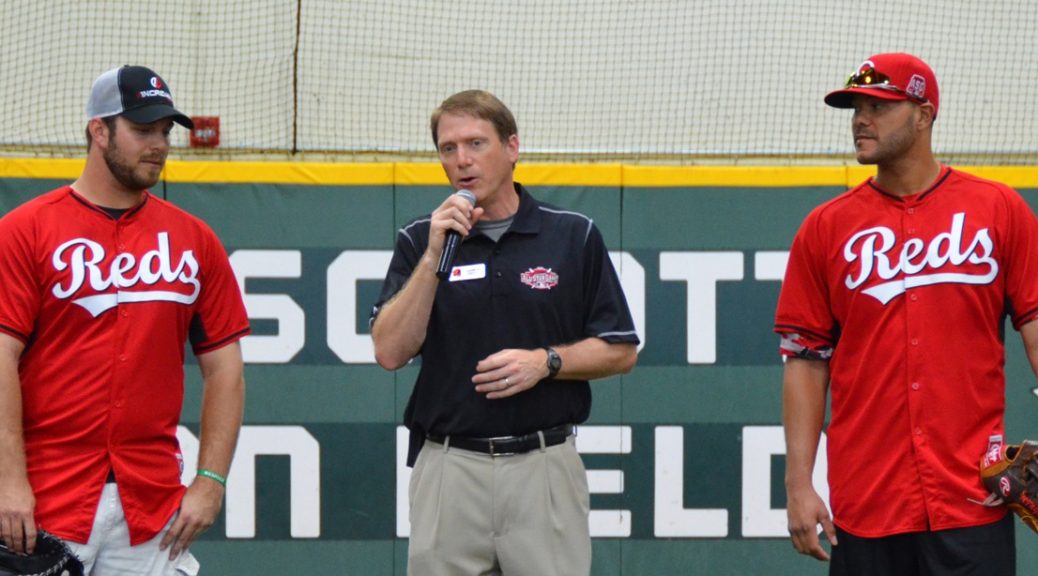
Charley Frank (center) stands with Reds players to address a young crowd of baseball enthusiasts

This is the latest in a series of “get to know us” posts about ABC’s leadership, both on the Board of Trustees and our staff. These stories give an insider’s view of the people behind Activities Beyond the Classroom. 

Charley Frank, Executive Director for the Cincinnati Reds Community Fund, is committed to developing youth baseball and softball programs as well as expanding baseball, softball and education programs throughout the region. Since he began as the Fund’s director, he has played a key role in the capital campaign for the expansion of the Community Fund’s “Urban Youth Academy”.

Let’s Start with the age-old Cincinnati question… Where did you go to school?

I attended Walnut Hills High School, and later attended Northwestern University.

What is your professional background?

I’m completing my 16th year as the director of the Cincinnati Reds Community Fund. Previously, I spent 11 years with the NBA’s Minnesota Timberwolves, and for the final five years I served as the Vice President of Communications.

Tell us a little about your family.

My wife Amy is a veterinarian, our son, Sam, is a senior at Walnut Hills, and our daughter, Avery, is currently a freshman at Walnut Hills.  Both of our kids are in involved in music and theater.  Sam has expressed an interest in politics and is involved in Harvard Model UN.  Sam has played 10 years of baseball, and is also a member of the Thespian Society.  Avery has played 7 years of softball.  Both kids are Honors Students.

Did you participate in any extracurricular activities?  If so, which ones, and what skills do you think you gained from them?

I was involved in both music and theater when I attended Walnut Hills. I also was the co-editor of the sports section of Chatterbox, a  Walnut Hills student newspaper. I played club and intramural sports in high school and college, and during college, I spent four years with the student radio station, WNUR-FM.

In my opinion, ALL have had an impact on my career choice and trajectory. Being involved in extracurricular activities taught me a great deal about communication, which played a major role in my career choices.  Also, because of the high expectations at Walnut Hills, I learned how to manage my time and how to prioritize, both skills that help me in every aspect of my adult life.

Cincinnati Reds pitcher, Sal Ramano (left) speaks with young baseball enthusiasts.

Outside of ABC, in what ways do you give (or in what ways have you given) back to the community?

I currently serve as the Executive Director of a nonprofit representing the Cincinnati Reds.  In this role, I spend a great deal of time building community throughout the region.  I look at myself as a community ambassador for the Reds.  The work I do allows me to get to know the different communities throughout the region on an intimate level.  The Reds have led recent field renovation projects in St. Bernard and Bellevue, KY, and host an annual neighborhood makeover effort with P&G, the Cincinnati Zoo, Kroger and Cincinnati Children’s Hospital.  We have been engaged everywhere from Louisville and Dayton to the West End, Lower Price Hill, and Avondale.  I also serve on boards of Halom House and Kid Glove.  Additionally, I am an involved parent at Walnut Hills High School.

How did you become involved with Activities Beyond the Classroom?

The Reds have been funding CPS varsity baseball for more than a decade through a connection with Dave Dierker (former Athletic Director) and Brian Leshner (Executive Director at Activities Beyond the Classroom). Thanks to the success of this partnership, we’ve since added girls’ softball as well as Junior Varsity baseball and softball programs.

On a personal level, my involvement at ABC revolves around the fact that most of my family attends or has attended CPS Schools, including myself, my wife, parents, siblings, and kids.  I feel very connected to the work that ABC does.  Most of the schools in the CPS district do not have the resources that schools like Walnut Hills, Hyde Park, Kilgore and Fairview-Clifton have.  Those extracurricular activities really shaped my life.  Being a part of an organization that focuses on providing access to every CPS student really means a lot to me.

What do you see as the greatest challenge for today’s students, and what do you think ABC’s role is in addressing this challenge?

A variety of stress factors impact today’s youth. Whether they’re CPS kids coming from troubled or under-served households, or even high-achievers dealing with the intense pressure of college admission, kids are all under a lot of pressure.

ABC’s role continues to be providing opportunities for extracurricular experiences of all types that can help kids feel connected to peers with similar interests. In my opinion, being a part of a team, club, production, or cultural group allows kids to experience life beyond themselves.  These activities are a great confidence builder and help prepare kids for life.  We’ve seen that kids who are involved in extracurricular activities have a higher graduation rate and turn out to be more responsible.  The payoff for getting and keeping kids involved in extracurricular programming is definitely worth the time invested.

What is one of your favorite ABC programs, and why?

I’m grateful that ABC supports the athletic departments at each high school, as well as the booster programs at schools that lack alumni coordination.  I also appreciate ABC’s role in helping to refurbish ball fields throughout the district, and the collaborative manner in which they partner with other community leaders.

ABC is expanding its arts programs and hosted the inaugural CPS International Jazz Festival on October 5th. What benefits do you think this event brought to the city of Cincinnati?

Beyond creating more awareness for ABC, it’s exciting that CPS students will be able to interact with professional musicians during the day and to participate in the event that night.

What has been the most rewarding outcome you’ve witnessed or experienced at ABC since joining the Board?

The strengthening of the partnership with CPS and the increase in program breadth and quality across the board.  This is an effective model that should be studied with other public school districts.

What are some goals you’d like to see ABC accomplish in the future?

I support our long-term goal of reaching EVERY child throughout CPS.  I am so pleased that we are taking on this big goal.  The CPS district consists of 44 elementary schools and 16 high schools.  This undertaking is no small feat.

What is the most important thing you would like the public to learn about ABC?

Every public school district in mid-to-major markets is lacking resources for extracurricular programs.  ABC not only kept athletics on the map a decade ago but is now working to make arts, music, culture and other extracurricular experiences available to more and more children. I believe that extracurricular activities change lives.